CEAP is our community's safety net.
CEAP is a community-based nonprofit agency dedicated to providing nutritious food and opportunities for elevating health and wellness in our community. We believe that we live in a nation of abundance – and we work every day to ensure that abundance is shared with all.
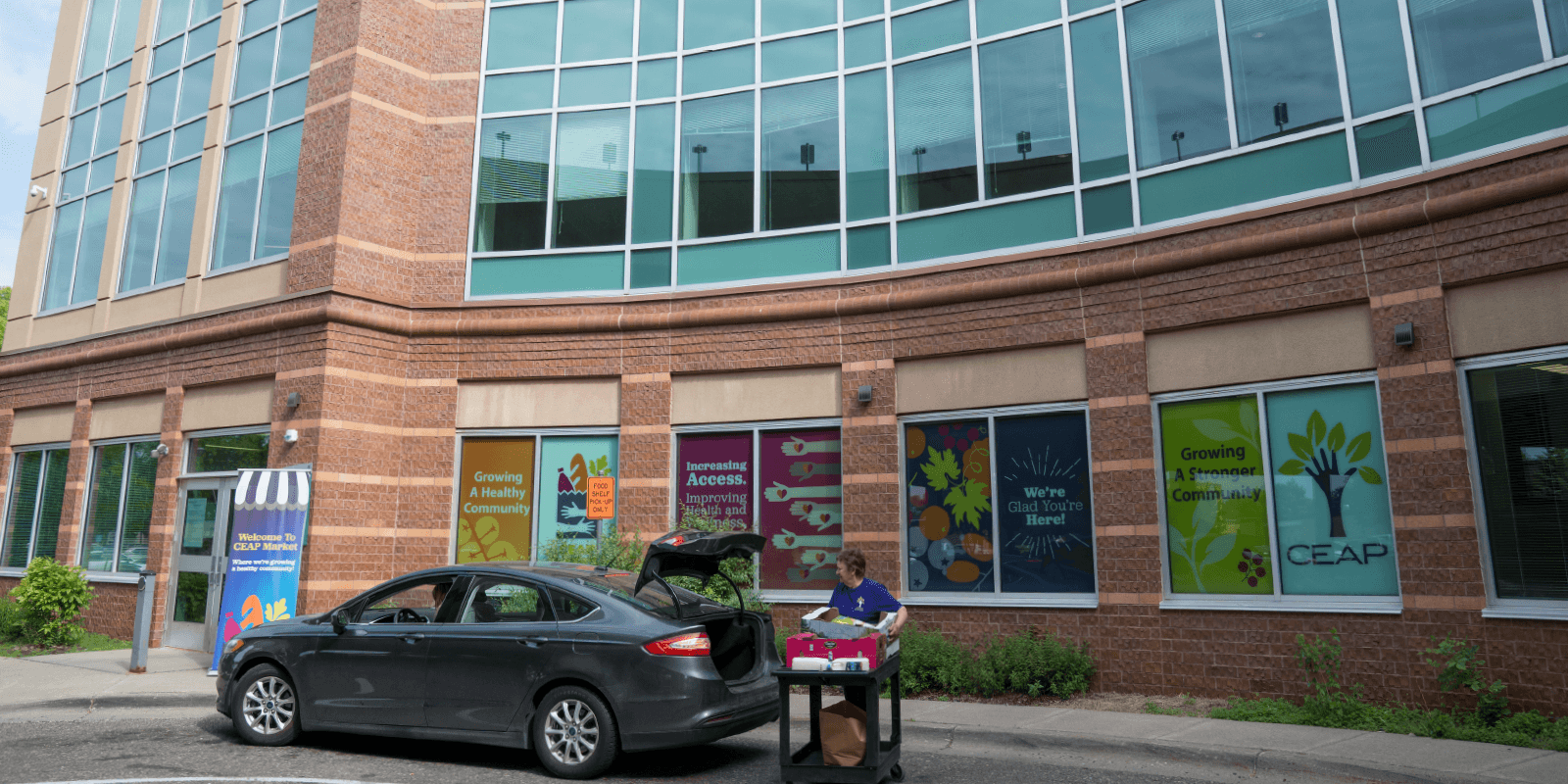
As a regional social services hub, we provide our neighbors with more than groceries – we also deliver warm meals to seniors, offer programs for families to access clothing, schools supplies and holiday toys, and connect people to healthcare and housing support.
At our core, we are a network of neighbors helping neighbors, working to create a community in which every person feels safe, loved, and nourished.
While we are located in Brooklyn Center, we have no geographic boundaries, and any neighbor who needs our services may use them.
Our Mission and History
CEAP mobilizes resources, shares abundance, and nourishes neighbors to create and celebrate a healthier, stronger, and more connected community.
CEAP was founded in April 1970 by Brooklyn Center resident Madeleine Roche, who, alongside local churches and community members, responded to a growing need for human services in Brooklyn Center and Brooklyn Park. Just two years later, CEAP became a tax-exempt nonprofit and established its first Board of Directors.
Over the years, CEAP has evolved alongside the community it serves. From its early days in the St. Alphonsus rectory, to a temporary home in the former Brooklyn Center City Hall thanks to the help of the Brooklyn Center Jaycees and the Bicentennial Commission, CEAP’s journey has been one of community partnership and growth. By 1980, the organization moved into a permanent building on donated land on Brooklyn Blvd, where it operated for 17 years before relocating to the 78th Ave building in Brooklyn Park in 1997.
In 2012, CEAP entered a new chapter, moving into the Northwest Family Service Center in partnership with Hennepin County Health and Human Services and Osseo Area Schools. This collaborative model allows CEAP to provide wraparound services—addressing not only hunger, but the broader challenges families face by connecting them to housing, healthcare, and education.
Today, CEAP continues to work hand-in-hand with community, corporate, government, and faith partners to help neighbors meet basic needs and build pathways to self-sufficiency. Together, we are creating a stronger, healthier, and more connected community.
